
Physio for back pain Aldinga
Assessment and treatment for lower back pain, stiffness, sciatica, and movement related back pain
We help people move more comfortably and return to everyday activities with physiotherapy assessment and rehabilitation.
HICAPS rebates
30-minutes one-on-one
AHPRA-registered
What is physiotherapy for back pain?
Physiotherapy for back pain involves assessing the joints, discs, muscles, nerves, ligaments, posture, movement patterns, and physical conditioning that may be contributing to symptoms.
Aldinga Bay Physio provides physiotherapy assessment and treatment for lower back pain, sciatica, stiffness, muscle strain, and chronic back pain in Aldinga.
Back pain can arise from many different structures throughout the spine and surrounding tissues, which means treatment needs to be based on the individual rather than a one size fits all approach. We use a combination of manual therapy, exercise rehabilitation, mobility exercises, strengthening exercises, dry needling, movement assessment, and education around posture, lifting, and activity modification based on the individual presentation.
Treatment focuses on supporting movement, function, confidence, and long term physical resilience while helping reduce the likelihood of recurrence.

Back pain physiotherapy assessment and treatment
Back pain can present in many different ways. Some people experience a sudden onset after lifting, sport, or an accident, while others develop gradually worsening stiffness or chronic lower back pain over time. Symptoms may involve the joints of the spine, discs, muscles, ligaments, or nerves, and the contributing factors are often different from person to person.
Lower back pain may also be influenced by movement habits, prolonged sitting, reduced strength and conditioning, repetitive work, stress on surrounding joints, or previous injuries elsewhere in the body. Because of this, physiotherapy for back pain starts with understanding the broader picture rather than only focusing on the painful area itself.
Physio for back pain
What back pain physiotherapy may include
Our physiotherapy for back pain service includes assessment, treatment, rehabilitation, and movement guidance based on your symptoms, lifestyle, work demands, and physical goals.

Back pain assessment
We assess how your symptoms, movement patterns, posture, and daily activities may be contributing to pain or stiffness.

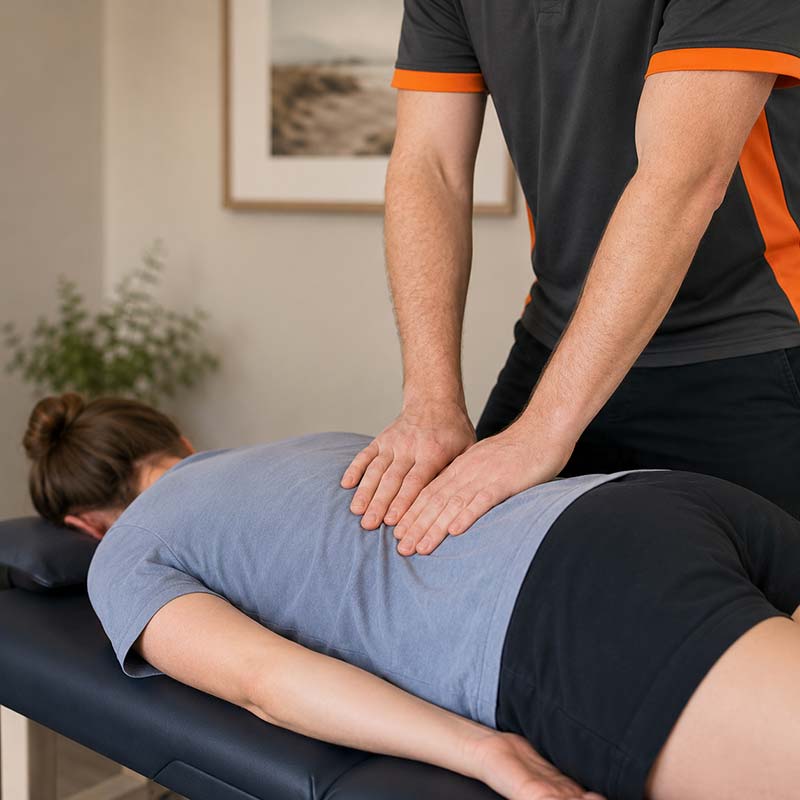
Hands on physiotherapy treatment
Treatment may include manual therapy, soft tissue treatment, dry needling, and mobility focused techniques where appropriate.

Exercise rehabilitation
We provide strengthening, mobility, and conditioning exercises designed to support recovery and build movement confidence.

Sciatica and nerve pain management
Assessment and treatment may help address symptoms involving nerve irritation, tingling, numbness, or referred pain.

Postural and ergonomic guidance
We help identify movement habits, workstation issues, lifting patterns, and physical demands that may be aggravating symptoms.

Return to activity support
Rehabilitation may be adjusted around work, sport, exercise, parenting, or everyday activities important to you.
Who physio for back pain may help
Physio for back pain may be appropriate for people experiencing acute injuries, recurring flare ups, persistent stiffness, or longer term chronic back pain symptoms.
This service commonly helps office workers dealing with prolonged sitting, driving, or workstation related lower back pain. It may also assist tradespeople, labourers, and physically active people managing lifting injuries, repetitive strain, or physically demanding workloads.
We also regularly see people whose symptoms have developed during gardening, DIY projects, sporting activities, gym training, parenting, or changes in physical activity levels. In other situations, people may not know exactly why their symptoms developed, but notice increasing stiffness, reduced mobility, or difficulty tolerating normal daily activities.
Some people attend because they want to return to exercise or sport confidently, while others simply want to move more comfortably throughout everyday life.
The impact back pain can have on everyday life
Back pain often affects far more than the spine itself. Even relatively mild symptoms can gradually change the way people move, sleep, work, exercise, or participate in normal activities. Over time, this can lead to reduced conditioning, movement confidence, and increased frustration around ongoing flare ups.
For some people, the main issue is difficulty sitting comfortably at work or during long drives. Others struggle with lifting, gardening, sport, gym training, or caring for children. Chronic back pain can also contribute to reduced activity levels, stiffness, fatigue, and fear of movement.
Physiotherapy aims to help people better understand what may be contributing to their symptoms while supporting movement, mobility, strength, and confidence over time. In many cases, improving overall conditioning and movement capacity is an important part of reducing recurrence and supporting long term function.
Understanding the causes of back pain
Back pain is often more complex than simply identifying one painful structure. Symptoms can arise from the joints of the spine, discs, nerves, muscles, ligaments, or surrounding connective tissues. Common structures involved in back pain include facet joints, spinal discs, sacroiliac joints, paraspinal muscles, gluteal muscles, hip flexors, and surrounding soft tissues.
Contributing factors may include prolonged sitting, poor posture, repetitive bending, lifting, deconditioning, sudden increases in activity, sporting injuries, or changes in workload. In other cases, people may develop symptoms gradually over time without one obvious injury event.
Conditions associated with back pain may include disc irritation, herniated discs, sciatica, radiculopathy, spinal stenosis, arthritis, muscle strain, or chronic movement dysfunction. However, assessment is important because similar symptoms can sometimes arise from very different underlying mechanisms. Understanding these contributing factors helps guide more appropriate treatment and rehabilitation planning.
How physiotherapy for back pain is delivered
Physiotherapy treatment begins with a detailed discussion about your symptoms, medical history, activity levels, work demands, and movement limitations. This helps us understand how the pain developed, how it behaves, and what factors may be contributing to ongoing irritation or reduced function.
The assessment process may involve:
- Reviewing symptom history and aggravating factors
- Assessing spinal movement and mobility
- Testing strength, flexibility, and conditioning
- Observing posture and movement patterns
- Assessing for nerve involvement where relevant
- Identifying movement compensation or protective guarding
- Discussing rehabilitation goals and activity expectations
Treatment often begins during the first consultation. As rehabilitation progresses, the focus gradually shifts toward movement, conditioning, confidence, and long term physical resilience.
Good to know
Common questions about back pain
Who provides physiotherapy for back pain in Aldinga?
Aldinga Bay Physio provides physiotherapy assessment and treatment for lower back pain, sciatica, stiffness, muscle strain, and chronic back pain in Aldinga.
Treatment is based on understanding the individual factors contributing to symptoms and developing an appropriate rehabilitation approach.
How does back pain physiotherapy work?
Back pain physiotherapy usually begins with a detailed assessment of symptoms, movement, posture, strength, flexibility, and daily activities. From there, treatment may involve manual therapy, exercise rehabilitation, mobility exercises, dry needling, movement education, and gradual return to activity depending on the presentation and goals of the individual.
What affects the cost of physiotherapy for back pain?
The cost of physiotherapy for back pain can vary depending on consultation length, assessment complexity, treatment requirements, and the number of sessions required over time. The number of sessions varies depending on the condition, contributing factors, activity demands, and rehabilitation needs of the individual.

Your local physiotherapist
Areas we service for back pain physiotherapy
Aldinga Bay Physio provides physiotherapy for back pain across Aldinga and surrounding southern areas including Aldinga Beach, Port Willunga, Sellicks Beach, Willunga, McLaren Vale, Seaford, Maslin Beach
Port Willunga
Sellicks Beach
Willunga
McLaren Vale
Seaford
Maslin Beach
Many people travel to our Aldinga clinic for lower back pain physio, sciatica treatment, rehabilitation after injury, mobility concerns, and ongoing management of recurring or chronic back pain symptoms.
Why choose us
Why choose Aldinga Bay Physio for back pain treatment

Local physiotherapy clinic in Aldinga
Aldinga Bay Physio supports people across Aldinga areas with physiotherapy assessment and treatment for back pain.
Individual assessment approach
We spend time understanding how your symptoms developed, what aggravates them, and the factors that may be contributing to ongoing pain or stiffness.
Focus on movement and function
Treatment aims to help people remain appropriately active while gradually improving tolerance to normal activities.
Experience with a wide range of back pain presentations
We assess and manage acute injuries, chronic back pain, sciatica, nerve irritation, movement restriction, and recurring flare ups.
Rehabilitation based treatment
Our approach may include manual therapy, exercise rehabilitation, mobility exercises, dry needling, and gradual return to activity planning.
Education and long term management
We explain assessment findings clearly and help people better understand movement, loading, conditioning, and factors linked to recurrence.
FAQs
Frequently asked questions about physiotherapy for back pain
What symptoms can physiotherapy help with?
Physiotherapy may assist with lower back pain, stiffness, muscle strain, nerve pain, sciatica, movement restriction, recurring flare ups, and chronic back pain presentations. Symptoms may include aching, sharp pain, burning pain, tingling, numbness, or reduced mobility depending on the structures involved and the contributing factors identified during assessment.
Can physiotherapy help with sciatica?
Physiotherapy may help assess and manage sciatica symptoms where nerve irritation or compression is contributing to pain, tingling, numbness, or weakness into the leg. Assessment is important because symptoms commonly referred to as sciatica can arise from different structures and movement patterns, which may influence treatment and rehabilitation planning.
Do I need imaging before seeing a physiotherapist for back pain?
Many people attend physiotherapy without prior imaging. Physiotherapy assessment often involves discussing symptoms, movement patterns, strength, mobility, and functional limitations before determining whether imaging may be appropriate. Where required, referral pathways or recommendations may be discussed based on the assessment findings and clinical presentation.
What treatments are commonly used for lower back pain physio?
Treatment may include manual therapy, soft tissue treatment, exercise rehabilitation, mobility exercises, strengthening exercises, dry needling, neurodynamic techniques, postural advice, ergonomic guidance, and activity modification. Treatment approaches are selected based on the individual presentation and how symptoms respond over time.
How many physiotherapy sessions are usually needed for back pain?
The number of physiotherapy sessions varies depending on the nature of the condition, how long symptoms have been present, physical conditioning, activity demands, and the complexity of contributing factors. Some people improve within a small number of sessions, while others with chronic back pain or recurring symptoms may require a longer rehabilitation approach.
Can physiotherapy help prevent back pain from returning?
Physiotherapy rehabilitation often focuses not only on symptom reduction, but also on improving movement, mobility, conditioning, strength, and physical resilience. Addressing contributing factors such as reduced conditioning, poor movement habits, repetitive strain, or weakness in surrounding muscle groups may help reduce the likelihood of recurrence over time.
Book a back pain physiotherapy appointment in Aldinga
If you are experiencing lower back pain, stiffness, sciatica, or recurring back pain symptoms, contact Aldinga Bay Physio to arrange an assessment.
Book your appointment online or call us directly.