
Physio for sciatica Aldinga
Assessment and treatment for sciatic nerve pain, leg pain, numbness and tingling
We help identify what may be causing sciatic nerve symptoms and provide physiotherapy treatment and rehabilitation based on how your particular presentation behaves.
HICAPS rebates
30-minutes one-on-one
AHPRA-registered
What is physiotherapy for sciatica?
Physiotherapy for sciatica involves assessing pain, numbness, tingling or weakness that travels along the pathway of the sciatic nerve and determining what may be producing those symptoms.
The sciatic nerve is formed from nerve roots in the lower back and travels through the buttock and down the leg towards the foot. Symptoms can range from a deep ache in the buttock to burning, sharp or electric pain extending into the calf or toes.
Importantly, sciatica describes a pattern of symptoms rather than one specific injury.
True sciatic nerve pain may result from irritation or compression of a nerve root in the lower spine. Similar symptoms can also arise from nerve irritation in the deep gluteal region, while other structures in the lower back and pelvis can refer pain into the buttock or thigh without the sciatic nerve itself being involved.
This is why physio for sciatica begins by working out which presentation is most likely before deciding how it should be managed.
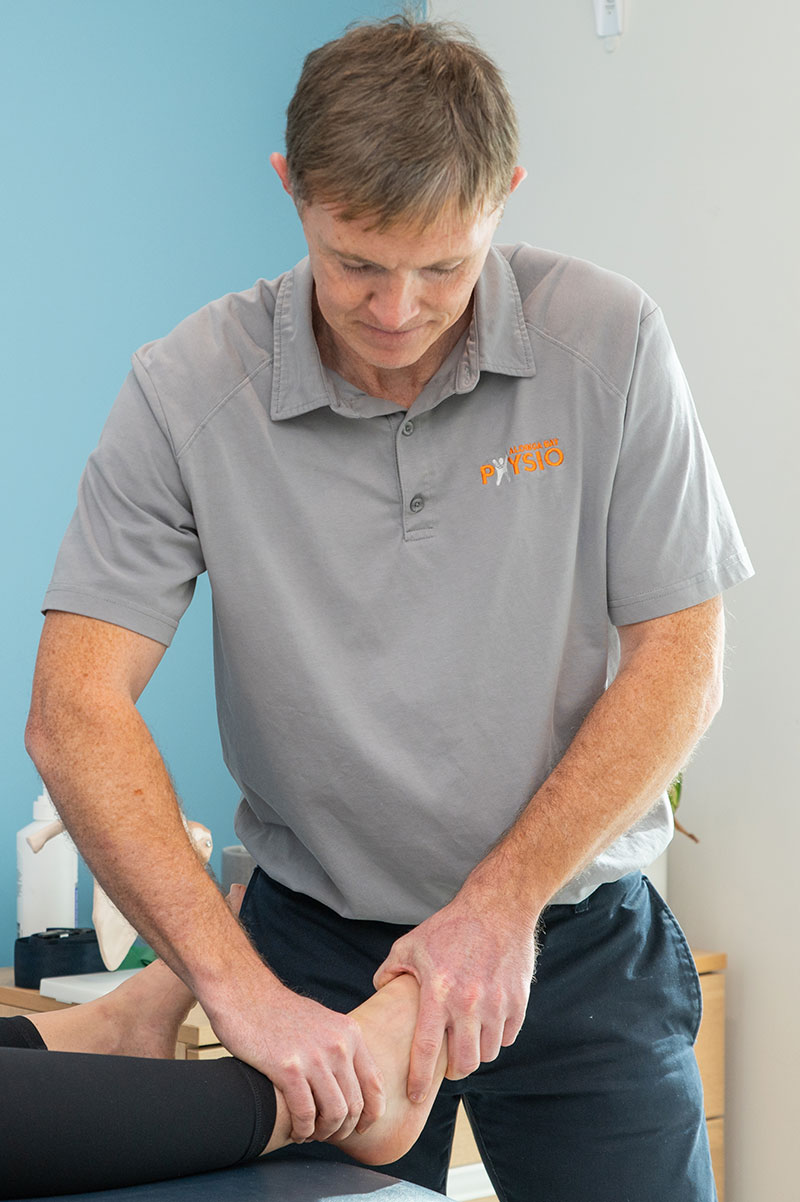
Sciatica physiotherapy assessment and treatment
Sciatica can behave quite differently from one person to another.
Some people develop sudden, intense leg pain following bending, lifting or another increase in physical load. Others experience symptoms that appear gradually and become more noticeable during prolonged sitting, standing, walking or particular spinal movements.
Assessment looks at both where the symptoms are felt and where they may actually be coming from.
For example, a disc protrusion in the lower back may irritate an adjacent nerve root. In another person, age-related narrowing of the passage through which the nerve exits the spine may contribute. Symptoms can also develop through irritation around the deep gluteal region rather than directly from the lumbar spine.
Physiotherapy treatment is then selected according to the findings rather than applying one standard treatment to everyone who describes their pain as sciatica.
Physio for sciatica
What sciatica physiotherapy may include
Our approach to physio for sciatica can include symptom management, movement assessment, neurological screening, manual treatment, nerve mobility work and progressive rehabilitation.

Identifying your particular presentation
We assess how your symptoms started, where they travel, what makes them better or worse and how different movements and positions affect them.
Neurological screening may include checking sensation, reflexes and muscle strength. Neurodynamic tests can also help assess how sensitive the involved nerve structures are.

Finding movements that change your symptoms
Some sciatic presentations have a directional preference, where repeated movement in a particular direction reduces leg symptoms or brings them closer towards the lower back.
This response, sometimes described as centralisation, can provide useful information about how the symptoms are behaving and which movements may be useful during rehabilitation.

Restoring sciatic nerve mobility
An irritated nerve can become sensitive to stretch and movement.
Neurodynamic techniques may use controlled nerve sliders or gliding movements designed to restore mobility without aggressively stretching already sensitive neural tissue.

Hands-on physiotherapy treatment
Depending on the presentation, treatment may include lumbar joint mobilisation, Mulligan Mobilisation with Movement, soft tissue techniques and dry needling.
These techniques are selected according to assessment findings and how symptoms respond rather than used routinely for every person with sciatica.

Rebuilding movement and physical capacity
As nerve sensitivity settles, rehabilitation can progress towards lumbar and pelvic control, hip strength, lower-limb movement and the physical demands of everyday life.
Exercise is progressively adjusted around what you need to return to, including walking, work, gardening, gym activity or sport.

Advice around sitting, work and daily activities
Prolonged sitting, driving, repeated bending and sudden increases in lifting can influence some presentations.
We can help identify activities that may need temporarily modifying and gradually build tolerance as symptoms improve.
Who physio for sciatica may help
Physio for sciatica may be appropriate for adults experiencing pain that travels from the lower back or buttock into the thigh, calf or foot.
Symptoms may include aching, burning, tingling, numbness, electric or shooting pain and, in some presentations, localised muscle weakness.
We see people whose symptoms begin suddenly after lifting, bending, physical work or sporting activity, as well as people whose sciatica develops more gradually alongside age-related changes in the lower spine.
Long periods of driving or desk work may aggravate symptoms for some people. Others notice problems after an unusually heavy period of gardening, manual work, training or other activity.
Sciatic nerve presentations occur across a wide age range. In clinical practice, symptoms are commonly seen in adults from around 40 to 70, but acute sciatica can also affect active people in their 20s and 30s.
People with broader lumbar symptoms can also read more about physio for back pain.
The impact sciatica can have on everyday life
Sciatica can make ordinary activities unexpectedly difficult.
Sitting through a workday, driving, sleeping, putting on shoes, bending towards the floor or standing for extended periods may become uncomfortable.
Walking can also be affected when pain travels through the buttock and leg.
For people with more irritable symptoms, finding a comfortable position may be difficult and the pain can dominate everyday routines. Others manage reasonably well during the day but notice symptoms building after prolonged sitting, repetitive movement or physical activity.
There can also be uncertainty about how much movement is safe.
Because nerve-related symptoms can feel sharp, burning or electric, people sometimes become understandably cautious about bending, exercising or loading the area.
Physiotherapy aims to help make sense of the presentation, identify movements that may be helpful and progressively restore confidence and physical capacity.
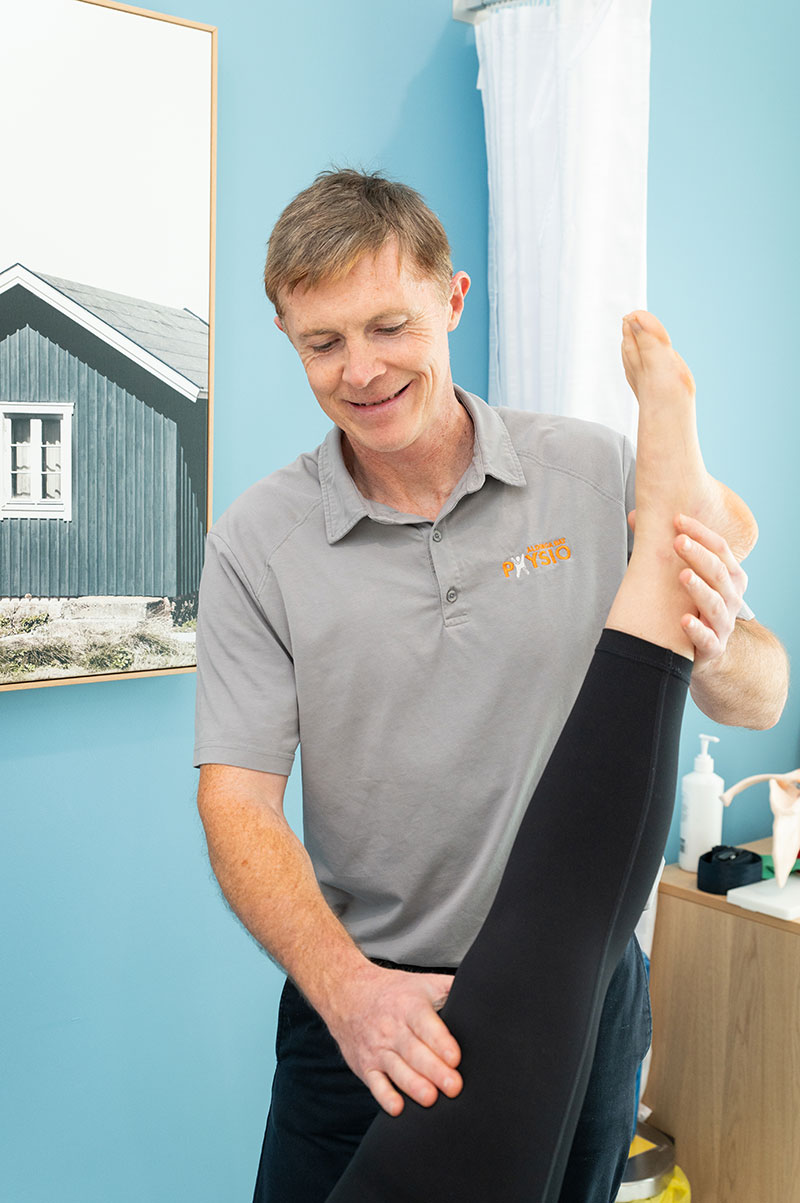
Understanding the causes of sciatica
Sciatica occurs when the nerve roots that form the sciatic nerve, or the nerve itself further along its pathway, become irritated, compressed or sensitive.
A common source is a lumbar disc problem. Disc strain, protrusion or prolapse around the L4/L5 or L5/S1 levels may irritate an adjacent nerve root through mechanical pressure, inflammatory irritation or a combination of both.
In other people, symptoms develop through degenerative narrowing around the openings where the spinal nerves leave the lower back. Changes such as reduced disc height, facet joint enlargement and osteophytes can reduce the available space around a nerve root.
Spondylolisthesis, where one vertebra moves forward relative to another, may also influence the space around an exiting nerve.
Not every sciatic presentation originates directly from the spine. The sciatic nerve passes through the deep gluteal region, where irritation or entrapment around structures such as the piriformis can produce symptoms further down the leg.
There is another important distinction too: pain referred from lumbar joints, ligaments or the sacroiliac region can travel into the buttock and thigh without direct nerve-root involvement.
That overlap is one of the reasons assessment matters.
How physiotherapy for sciatica is delivered
Treatment begins with a detailed discussion about how your symptoms developed, where they travel and the activities or positions that aggravate or ease them.
We are interested not only in where the pain is felt, but in how the symptoms behave.
Assessment may involve:
- reviewing symptom history and possible triggers
- assessing lumbar and hip movement
- testing movements or positions that increase or reduce symptoms
- neurological screening of sensation, reflexes and muscle strength where appropriate
- neurodynamic testing of nerve sensitivity and mobility
- assessing strength and lumbopelvic movement control
- considering prolonged sitting, driving, lifting, training and other load factors
- identifying your work, daily activity or sporting goals
The findings help distinguish between presentations such as disc-related radicular symptoms, degenerative narrowing, deep gluteal involvement and non-neural referred pain.
Treatment can then progress from settling an irritable presentation towards restoring nerve mobility, movement and physical capacity.
Good to know
Common questions about sciatica
Who provides physio for sciatica in Aldinga?
Aldinga Bay Physio provides physiotherapy assessment and treatment for sciatic nerve pain, leg pain, numbness, tingling and other symptoms associated with sciatica in Aldinga.
Treatment begins by identifying the likely mechanism contributing to the symptoms rather than assuming every case of leg pain has the same cause.
How does physiotherapy for sciatica work?
Physiotherapy for sciatica assesses the lower back, nerve function, movement, symptom response and relevant physical demands.
Treatment may include advice around symptom-provoking activities, directional movement exercises, neurodynamic techniques, manual therapy and progressive strengthening and conditioning depending on the presentation.
What affects the cost of physiotherapy for sciatica?
The overall cost depends on consultation requirements, the complexity and irritability of the condition and the number of appointments required.
Some presentations settle relatively quickly, while recurrent or more complex nerve symptoms may require a longer rehabilitation process.

Your local physiotherapist
Areas we service for sciatica physiotherapy
Aldinga Bay Physio provides physiotherapy for sciatica to people from Aldinga and surrounding southern areas including Aldinga Beach, Port Willunga, Sellicks Beach, Willunga, McLaren Vale, Seaford and Maslin Beach.
Port Willunga
Sellicks Beach
Willunga
McLaren Vale
Seaford
Maslin Beach
People attend our Aldinga clinic for assessment and treatment of sciatic nerve pain, lower-back-related leg symptoms and recurring episodes that affect work, movement, exercise and daily activities.
Why choose us
Why choose Aldinga Bay Physio for sciatica treatment

Focus on finding the source of your symptoms
Sciatica is not one single condition. We assess how symptoms behave and distinguish between nerve-root irritation, deep gluteal involvement and pain referred from other structures where possible.
Neurological and movement assessment
Assessment may include reflexes, sensation, muscle strength, neurodynamic testing and responses to different spinal movements where these are relevant to the presentation.
Experience with overlapping symptoms
Sciatic nerve symptoms can sometimes be mistaken for a local hip, hamstring, calf or other lower-limb problem.
We consider both the painful area and the possibility that symptoms may originate elsewhere along the neural pathway.
Broad physiotherapy treatment approach
Treatment may draw on neurodynamic mobilisation, McKenzie Mechanical Diagnosis and Therapy principles, Maitland mobilisation, Mulligan techniques, soft tissue treatment, dry needling and exercise rehabilitation where appropriate to the individual presentation.
Rehabilitation beyond short-term symptom relief
As symptoms become less irritable, the focus can shift towards improving movement control, hip and trunk capacity and tolerance for work, exercise and daily activities.
Recurrent episodes are also considered in the context of previous triggers, physical capacity and changes in activity load.
Education and long term management
We explain assessment findings clearly and help people better understand movement, loading, conditioning, and factors linked to recurrence.
FAQs
Frequently asked questions about physiotherapy for sciatica
What does sciatica feel like?
Sciatica may feel like an ache, burning pain, sharp or electric sensation travelling from the buttock into the leg. Some people also experience tingling, numbness or localised weakness.
Symptoms vary depending on the nerve structures involved and the underlying mechanism.
Is all pain travelling down the leg sciatica?
No. Pain from joints, ligaments and other structures in the lower back or pelvis can refer into the buttock or thigh without direct involvement of the sciatic nerve.
Deep gluteal problems can also irritate the nerve away from the spine.
Assessment helps determine which presentation is most likely.
Can sciatica feel like a hamstring or calf injury?
It can.
In practice, people sometimes attend physiotherapy believing they have injured the hamstring, calf, hip or another part of the leg when assessment suggests the symptoms are neural in origin.
The history, exact symptom pattern, neurological findings and response to movement can help distinguish between these presentations.
Can sitting and driving aggravate sciatica?
Prolonged sitting and driving can aggravate some sciatic presentations.
Extended sitting places sustained load through the lumbar region and may also increase pressure around the deep gluteal area. The relevance of this varies according to the individual mechanism producing the symptoms.
Should I stretch my sciatic nerve?
An irritable nerve can be sensitive to stretch, so aggressive stretching is not always appropriate.
Physiotherapy may instead use controlled neurodynamic sliding or gliding techniques that move the nerve through surrounding tissues without unnecessarily provoking symptoms.
What happens if sciatica is not settling with physiotherapy?
Some highly irritable or persistent presentations may require involvement from a General Practitioner or medical specialist.
The supplied clinical approach includes communication with medical practitioners where physiotherapy alone is not sufficiently settling symptoms and further medical management needs to be considered.
Can physiotherapy help with recurring sciatica?
Recurrent episodes may benefit from looking beyond the current flare-up.
Physiotherapy can assess movement control, physical capacity, previous activity or training spikes and other factors that may have contributed to repeated episodes, then progressively build rehabilitation around the individual presentation.
Book a sciatica physiotherapy appointment in Aldinga
If you are experiencing sciatic nerve pain, leg pain, numbness, tingling or recurring symptoms associated with your lower back or buttock, contact Aldinga Bay Physio to arrange an assessment.
Learn more about sciatic nerve pain and how physiotherapy identifies its source or book an appointment to discuss your symptoms.