
Physio for headaches Aldinga
Physiotherapy for headaches, migraine and neck-related symptoms
We assess and treat cervicogenic headaches, migraine-related neck symptoms, muscle tension and dizziness.
HICAPS rebates
30-minutes one-on-one
AHPRA-registered
What is physiotherapy for headaches and migraine?
Aldinga Bay Physio provides physiotherapy for headaches by first identifying what type of headache you may be experiencing and which physical factors, if any, are contributing. Our broader physiotherapy services also cover musculoskeletal, rehabilitation and movement-related conditions that may overlap with neck or headache symptoms.
Two presentations we commonly consider are cervicogenic headache and migraine, but they are not the same condition.
A cervicogenic headache is a secondary headache where pain felt in the head originates from structures in the neck or, in some presentations, the jaw. It often causes a steady ache around the base of the skull, temple or behind the eye.
Migraine is a neurological condition. It may cause throbbing or pulsing head pain alongside nausea, vomiting, sensitivity to light, sound or smells, and sometimes aura.
There can also be overlap. Someone with migraine may have neck and shoulder tension or cervical sensitivity alongside their neurological symptoms.
That is why physio for headaches is based on understanding the individual presentation rather than treating all head pain in the same way.
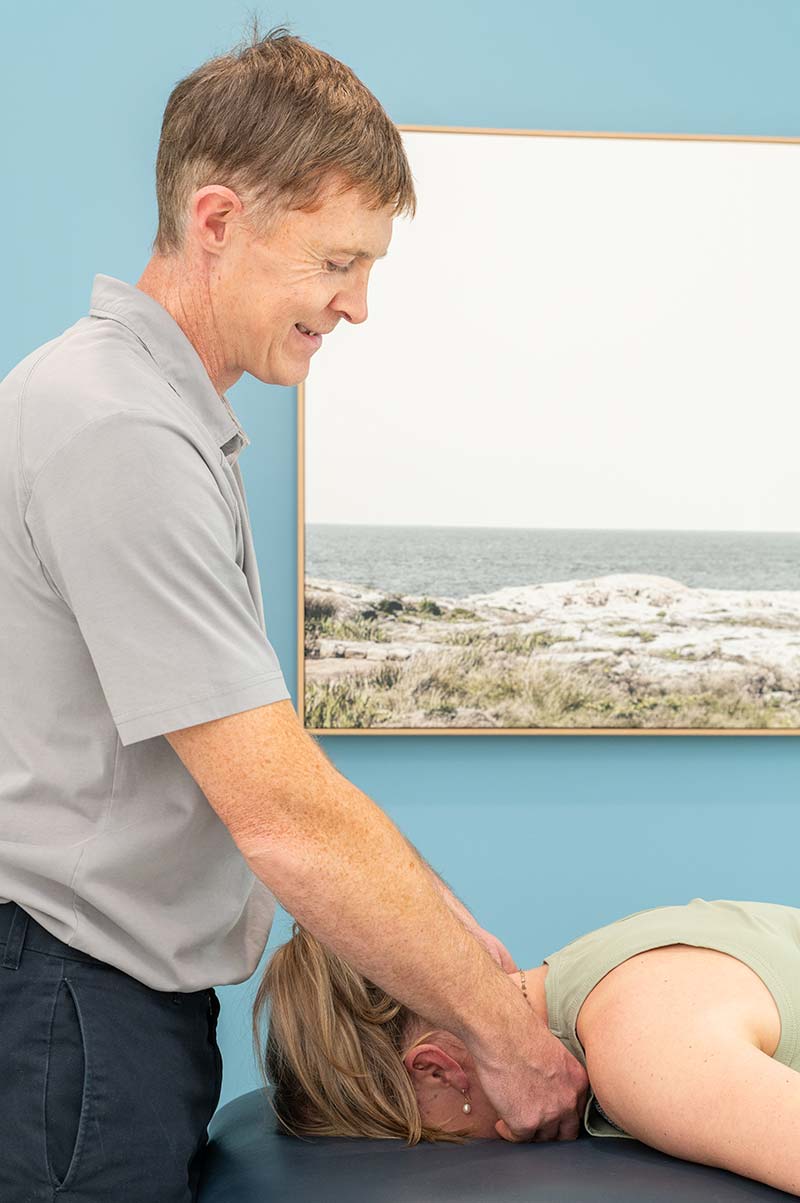
Headache and migraine physiotherapy assessment and treatment
We begin with a detailed history to understand how the headache started, where the pain is felt, what symptoms occur with it, and what seems to trigger or aggravate it.
We use those details to build an initial picture of whether the symptoms are more consistent with cervicogenic headache, migraine, or a presentation where both neurological and musculoskeletal factors may be relevant.
For neck-related headache, the physical examination may include the upper cervical joints, surrounding muscles, posture and movement.
One particularly useful finding can be whether pressure or movement through a specific structure reproduces the person’s familiar headache. When the recognised symptom can be recreated from an upper cervical joint or muscle, it may help identify what is contributing.
For migraine, physiotherapy does not treat migraine as though it were simply a neck problem. Instead, we look for physical factors that may be adding to the overall symptom picture.
Physio for headaches
What headache and migraine physiotherapy may include
Treatment depends on what the assessment identifies and how the symptoms behave.

Upper cervical joint treatment
Cervicogenic headache can involve stiffness or irritation through the upper cervical spine, particularly around the C1, C2 and C3 facet joints.
When assessment indicates these joints are contributing, manual therapy may be used to improve movement and reduce local sensitivity.

Treatment for neck and shoulder muscle tension
Muscle overactivity through the upper neck, shoulders and shoulder blades can contribute to headache symptoms or accompany migraine.
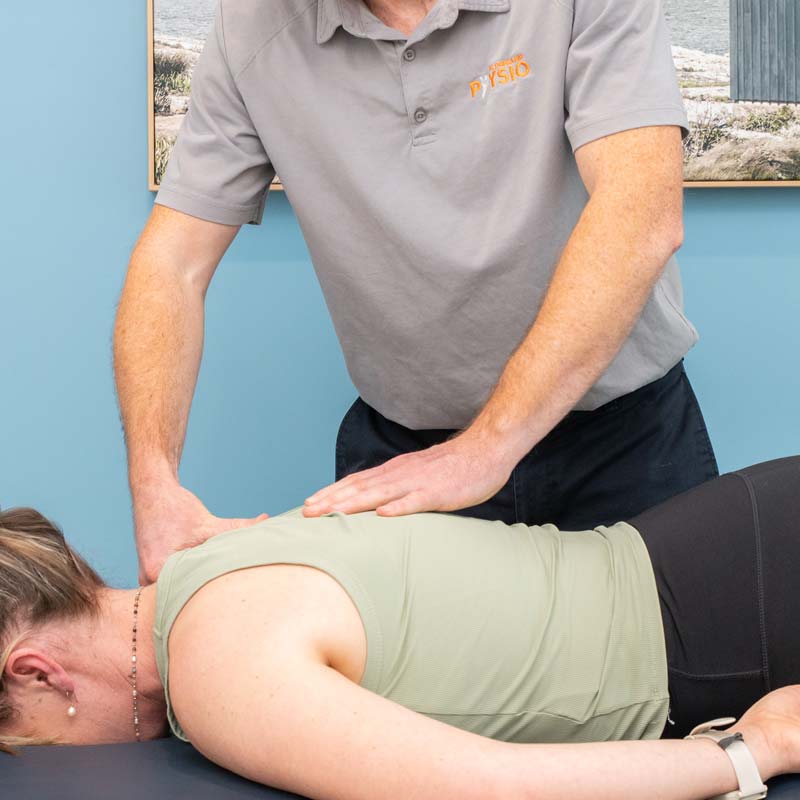
Soft tissue therapy may be used where this tension is relevant to the presentation.

Watson Headache® Approach principles
Anthony Sheridan has undertaken training in the principles of the Watson Headache® Approach and uses these concepts when assessing and treating headache presentations.
The approach places particular emphasis on the upper cervical spine and its relationship to familiar headache symptoms.

Maitland, Mulligan and soft tissue techniques
Maitland mobilisation and Mulligan techniques may be used where restricted or sensitive cervical joints are contributing.
Soft tissue therapy and, where appropriate, dry needling may also be used when muscle overactivity or trigger points are part of the presentation.

Posture, workstation and movement strategies
Long periods in one position, forward head posture, rounded shoulders or poorly arranged workstations may contribute to some cervicogenic headache presentations.
Physiotherapy can help identify these patterns and introduce practical changes where they appear relevant.

Vestibular exercise where dizziness is present
Some people with migraine also experience dizziness, vertigo or motion sensitivity.
Where appropriate, vestibular exercises may be used to gradually retrain balance, visual and movement responses.
Exercise and physical capacity
Exercise can help improve neck and upper-back strength, postural endurance and tolerance for everyday activity.
For people with migraine, physical activity may also form part of a broader strategy around stress and general health.
Who physio for headaches and migraine may help
Headache physiotherapy can be appropriate for people experiencing recurring headaches where the neck appears to contribute.
Common presentations include pain around the base of the skull, temple or behind the eye, especially when symptoms are linked with neck stiffness, sustained postures, movement or muscle tension.
Cervicogenic headache can develop gradually or follow an event such as whiplash. Some people notice flare-ups after sleeping awkwardly, heavy lifting or spending long periods working at a screen.
Physiotherapy can also support people with migraine who experience significant neck or shoulder tension, cervical sensitivity, dizziness or other physical symptoms alongside their attacks.
The role of physiotherapy is different in migraine because migraine itself is neurological. The aim is to identify physical contributors that can reasonably be addressed as part of wider migraine management.
People whose symptoms are strongly associated with neck pain can also read more about physio for neck pain.
The impact headaches and migraine can have on everyday life
Recurring headaches can affect concentration, screen time, driving, exercise, household tasks and social activities.
Migraine may have an even broader impact when symptoms include nausea, light sensitivity, sound sensitivity or visual disturbance.
Some people also become cautious between attacks because they are unsure what may trigger another episode.
For cervicogenic headache, symptoms may build gradually across a working day as the upper neck becomes increasingly stiff or surrounding muscles fatigue.
Physiotherapy aims to identify manageable physical contributors and provide strategies that fit the person’s daily routine.
Understanding the causes of headaches and migraine
Headache and migraine can arise through very different mechanisms.
Migraine is a neurological condition and its exact cause is not fully understood. Genetics may play a role, and many people who experience migraine have relatives with similar attacks.
A range of factors may influence when an episode occurs. These can include hormonal changes, physical or emotional stress, poor sleep, skipped meals, certain foods or drinks, bright or flashing lights, loud sounds, strong smells and changes in weather.
Cervicogenic headache has a different basis.
Pain can be referred into the head from structures in the upper cervical spine. In clinical practice, the upper facet joints, particularly around C1 to C3, can be important contributors when they become stiff or irritated.
Muscle strain, sustained postural loading, whiplash and age-related changes may also contribute.
Even relatively ordinary events such as sleeping awkwardly or doing an unusual amount of lifting can aggravate a sensitive neck and lead to a headache flare-up.
The important point is that headache treatment needs to reflect the type of headache and the contributing factors present in that person.
How physiotherapy for headaches and migraine is delivered
The assessment begins with understanding the headache rather than immediately treating the neck.
The history helps us map the pattern of symptoms, identify associated features and decide what should be examined physically.
Assessment may include:
- discussing the location, character and timing of headaches
- identifying associated migraine symptoms such as nausea, aura or sensory sensitivity
- reviewing possible triggers and recurring patterns
- assessing cervical spine movement
- examining the upper cervical facet joints
- checking whether particular structures reproduce the familiar headache
- assessing muscle tension around the neck, jaw, shoulders and shoulder blades
- reviewing posture, workstation setup and prolonged daily positions
- assessing strength and endurance where relevant
- considering dizziness, vertigo or motion sensitivity when present
One thing particularly useful is being able to reproduce the person’s familiar headache during assessment.
If controlled pressure through an upper cervical joint or muscular trigger point recreates the recognised symptom, it provides useful information about what may be contributing.
Treatment can then focus on the relevant findings rather than applying a standard headache program.
Good to know
Common questions about headaches and migraine
Who provides physio for headaches in Aldinga?
Aldinga Bay Physio provides assessment and treatment for cervicogenic headache, neck-related headache symptoms and physical contributors that may accompany migraine.
How does physiotherapy for headaches work?
Physiotherapy for headache may involve cervical spine assessment, manual therapy, soft tissue treatment, postural and ergonomic changes, strengthening and movement strategies.
For migraine, physiotherapy focuses on relevant physical contributors rather than treating migraine as a purely musculoskeletal condition.
What affects the cost of headache physiotherapy?
The total cost depends on the complexity of the presentation, how frequently symptoms occur, and the amount of physiotherapy required.

Your local physiotherapist
Areas we service for headache and migraine physiotherapy
Aldinga Bay Physio provides physio for headaches and related migraine support for people from Aldinga and surrounding southern areas including Aldinga Beach, Port Willunga, Sellicks Beach, Willunga, McLaren Vale, Seaford and Maslin Beach.
Port Willunga
Sellicks Beach
Willunga
McLaren Vale
Seaford
Maslin Beach
People attend our clinic for neck-related headaches, recurring headache patterns, migraine-associated neck symptoms, dizziness and other presentations where physiotherapy assessment may be appropriate.
Why choose us
Why choose Aldinga Bay Physio for headache and migraine treatment

Assessment that looks beyond the headache label
We do not assume all headaches should be treated the same way. We first look at the symptom pattern, then assess the structures and physical factors that may reasonably be contributing.
Experience identifying neck-related headache
For cervicogenic headache, reproducing the familiar pain from a particular cervical joint or muscle can provide valuable clinical information.
Upper cervical joints, surrounding muscles and daily mechanical loads are considered together.
Training in headache-specific assessment
Anthony has undertaken training in the principles of the Watson Headache® Approach and incorporates these concepts into assessment where appropriate.
He also draws on Maitland mobilisation, Mulligan techniques, soft tissue therapy and dry needling according to the presentation.
Looking at what may be driving muscle tension
When neck or shoulder muscles are overactive, we look beyond simply releasing them. We also consider daily routines, workstation setup, posture, movement habits and strength to understand why those muscles may repeatedly become overloaded.
A broader view of migraine-related physical factors
For migraine, we can consider patterns around stress, sleep, activity and environmental stimuli alongside physical factors such as neck tension or vestibular symptoms.
Physiotherapy is used as one part of the wider management picture.
FAQs
Frequently asked questions about physiotherapy for headaches and migraine
What is a cervicogenic headache?
A cervicogenic headache is a secondary headache where the pain felt in the head originates from structures elsewhere, most commonly the upper neck.
It often presents as a steady ache around the base of the skull, temple or behind the eye.
Is a cervicogenic headache the same as migraine?
No. Migraine is neurological and commonly includes throbbing or pulsing pain, nausea, sensory sensitivity and sometimes aura.
Cervicogenic headache arises from physical structures such as joints or muscles in the upper cervical region.
Can neck problems contribute to headaches?
Yes, particularly in cervicogenic headache.
Upper cervical joint stiffness or irritation, muscle overactivity and prolonged mechanical loading can refer pain into the head.
Can physiotherapy help migraine?
Physiotherapy does not treat migraine as if it were simply a neck condition.
It may help address physical factors that accompany the presentation, including neck and shoulder tension, cervical sensitivity, reduced movement and vestibular symptoms.
Can posture cause headaches?
Sustained positions can contribute to some cervicogenic headache presentations.
Forward head posture, rounded shoulders and long periods at a workstation may increase demand on the upper cervical joints and surrounding muscles.
What is the Watson Headache® Approach?
The Watson Headache® Approach is a headache-specific assessment and treatment framework focused particularly on the upper cervical spine.
Anthony has undertaken training in its principles and uses them when appropriate.
Can physiotherapy help with recurring headaches?
For some people, identifying and addressing recurring mechanical contributors can help improve how headache symptoms are managed.
This may involve maintaining cervical movement, improving strength and endurance, changing workstation habits or addressing recurring muscular tension.
When should I see a doctor about headaches or migraine?
Medical assessment is appropriate when headaches are new, unusual, severe, changing in character or accompanied by concerning neurological or systemic symptoms.
Physiotherapy is most appropriate when assessment indicates a musculoskeletal or physical component that can reasonably be addressed.
Book a headache physiotherapy appointment in Aldinga
If recurring headaches are associated with neck stiffness, muscle tension, posture, movement or other physical factors, Aldinga Bay Physio can assess what may be contributing and whether physiotherapy is appropriate.
For people with migraine, we can also assess physical and vestibular factors that may form part of the broader symptom picture.
Learn more about migraine physiotherapy and when the neck may be part of the picture or book an appointment to discuss your symptoms.