
Post operative physiotherapy Aldinga
Rehabilitation after surgery for movement strength and function
We help you progress from the early stages after surgery through to everyday movement, work, exercise or sport, based on your procedure and how you are recovering.
HICAPS rebates
30-minutes one-on-one
AHPRA-registered
What is post operative physiotherapy?
Post operative physiotherapy is rehabilitation following surgery.
The operation itself may repair, reconstruct or replace a damaged structure, but recovery continues well beyond the procedure. Physiotherapy helps restore movement, rebuild strength, manage pain and swelling, retrain normal movement patterns and progressively prepare your body for the activities you need to return to.
No two post-operative recoveries are exactly alike.
Even people who have undergone the same type of surgery can progress differently depending on the details of the procedure, the tissues involved, their strength and conditioning before surgery and how their body responds afterwards.
Aldinga Bay Physio provides post operative physiotherapy following a broad range of orthopaedic and spinal procedures. Rehabilitation works within your surgeon’s restrictions and expected healing timeframes while adjusting treatment and exercise according to your progress.
The aim is to move through each stage safely without treating the name of the operation as the complete rehabilitation plan.
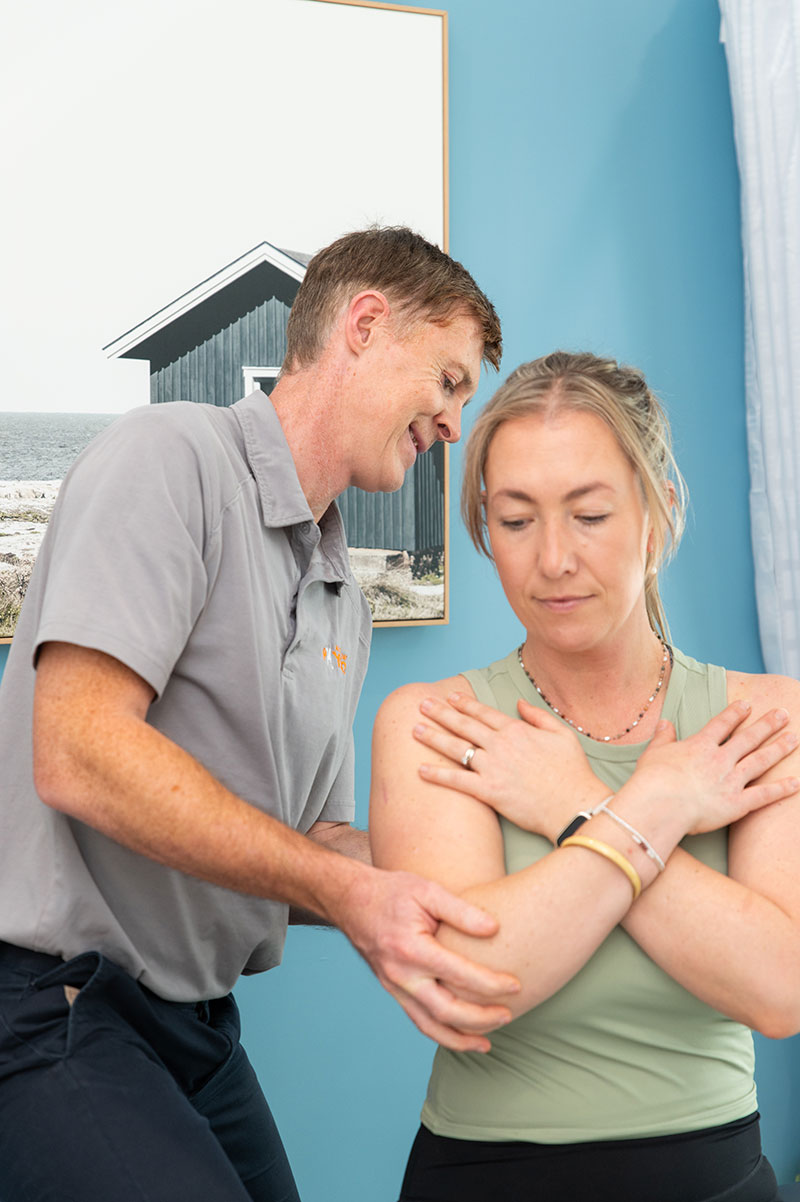
Post operative physiotherapy assessment and rehabilitation
The starting point for rehabilitation is understanding exactly what surgery you have had.
A general surgical description does not always tell the full story.
A shoulder arthroscopy, for example, may include additional procedures such as a biceps tenodesis or subacromial debridement. These differences can affect healing timeframes, movement restrictions and how quickly load can be introduced.
The same applies after anterior cruciate ligament (ACL) reconstruction. Rehabilitation may vary depending on the graft used, such as a hamstring tendon graft, patellar tendon graft or synthetic graft.
We also consider how you were functioning before surgery.
Someone who entered surgery with good strength and conditioning may have a different starting point from a person who had already experienced months of pain, weakness or reduced activity.
Post operative physiotherapy therefore combines the surgeon’s guidelines with what we see in front of us at each stage of recovery.
Post Operative Physiotherapy
What post operative physiotherapy may include
Your rehabilitation changes as healing progresses. Early priorities can look very different from what is needed several weeks or months later.

Restoring range of motion safely
Swelling, pain, tissue healing and surgical restrictions can all limit movement after an operation.
Physiotherapy helps restore range of motion progressively while respecting any limits or timeframes provided by the surgeon.
The aim is not to force movement quickly, but to regain it at an appropriate rate for the procedure and the individual.

Rebuilding muscle strength
Strength can be lost through reduced activity before surgery, immobility afterwards and inhibition caused by pain and swelling.
Early rehabilitation may begin with relatively simple muscle activation before progressing into more demanding strengthening.
As recovery continues, exercises are advanced according to the strength and function needed for daily activity, work or sport.

Managing pain and swelling
Pain and swelling are common in the early stages following many procedures.
Treatment may include appropriate movement, offloading strategies, gentle mobilisation, soft tissue techniques and advice around positioning or elevation.
How much swelling is present and how it changes over time can also help guide the pace of rehabilitation.

Retraining normal movement
It is common to develop altered movement patterns after surgery.
Following lower-limb procedures, this may involve restoring a more normal walking pattern and progressing safely away from crutches or other aids.
After upper-limb surgery, rehabilitation may involve regaining shoulder blade control, shoulder rhythm and appropriate use of a sling where required.

Safe use of aids and early movement
Crutches, walking frames, braces and slings can be important during recovery, but they also need to be fitted and used correctly.
We help you understand how to use these aids and, when appropriate, how to gradually reduce your reliance on them.
Early controlled movement may also form part of maintaining circulation and reducing stiffness, within the precautions provided by your surgical team.

Higher-level rehabilitation
Rehabilitation does not necessarily finish when you can manage basic daily activities.
A physical tradesperson may need to regain strength for lifting, carrying, climbing or working in demanding positions.
An athlete may eventually need running, power, agility or sport-specific drills.
The later stages are built around the actual demands you are returning to.
Who post operative physiotherapy may help
We provide rehabilitation after a wide range of orthopaedic and spinal procedures.
Knee surgery may include total knee replacement, arthroscopy, meniscal repair, ACL reconstruction or patellar stabilisation.
Hip procedures can include total hip replacement, hip arthroscopy and revision surgery.
Shoulder and upper-limb rehabilitation may follow rotator cuff repair, shoulder replacement, shoulder stabilisation, subacromial decompression, carpal tunnel release, trigger finger surgery, wrist fracture fixation or other procedures.
We also see people following foot and ankle surgery, including Achilles tendon repair, ankle arthroscopy and ankle fusion, along with spinal procedures such as spinal fusion, lumbar microdiscectomy and laminectomy.
The rehabilitation goals can be equally varied.
For one person, success may mean getting up and down stairs confidently after a knee replacement. For another, it may be returning to physical work, golf, running or competitive sport.
People rehabilitating a knee procedure can also learn more about physio for knee pain, while athletes returning after surgery may benefit from the principles covered in physio for sports injuries.
The impact surgery can have on everyday life
Surgery can temporarily change how you manage even familiar activities.
Walking, dressing, sleeping, driving, using stairs, getting in and out of a chair or completing household tasks may require more thought during the early stages.
There can also be a psychological side to recovery.
Previous experiences with pain, expectations about the operation, confidence in movement, motivation and personal goals can all influence how someone approaches rehabilitation.
For this reason, we do not assume that everyone should reach exactly the same milestone at exactly the same time.
One person may regain range of motion quickly but struggle with strength. Another may have good strength but persistent swelling or difficulty trusting the operated limb.
Recognising those differences helps determine what deserves the most attention at each stage.
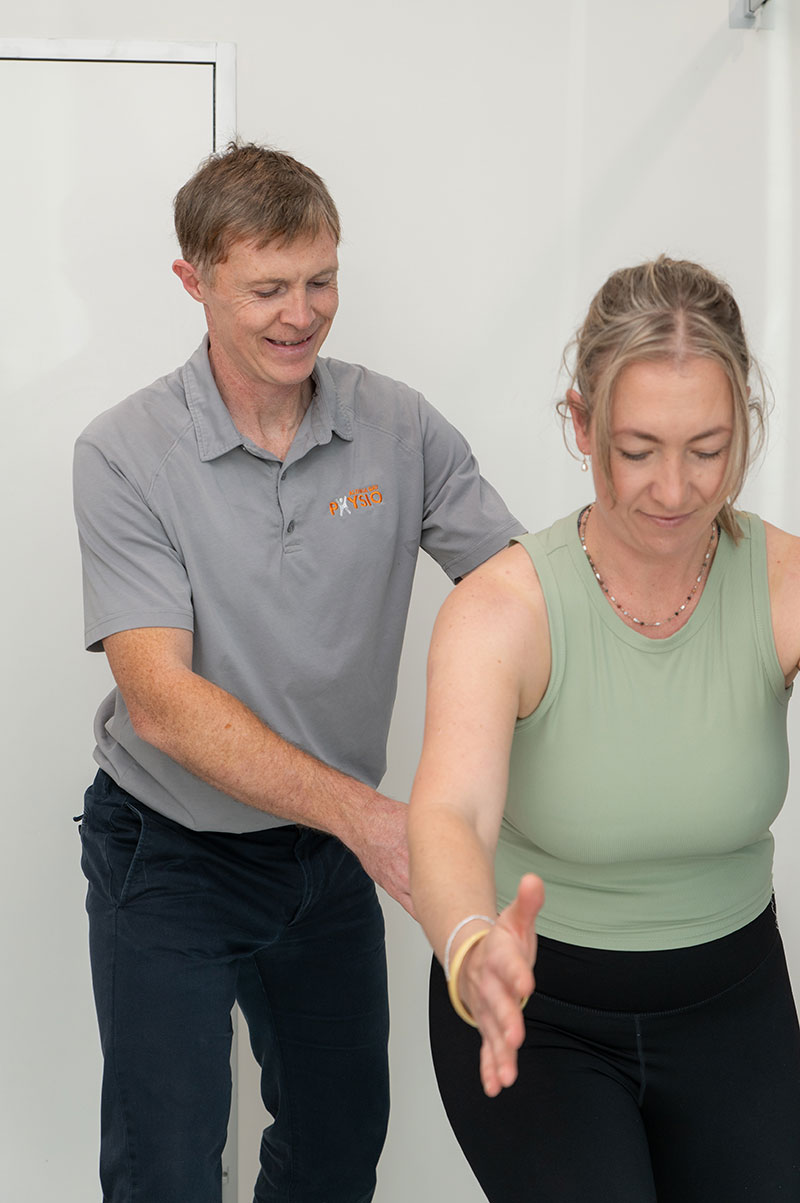
Understanding why post-operative recovery varies
Surgical protocols provide an important framework, but recovery rarely follows a perfectly straight line.
The complexity of the operation, the surgical approach and the amount of tissue involved can all influence the early stages.
Two procedures with the same name may also contain important differences.
An ACL reconstruction can use different grafts. A shoulder arthroscopy may include additional work that changes what needs protecting. The amount of bruising or swelling may differ even between people undergoing similar procedures.
Pre-operative function matters too.
A person who remained active and strong before surgery begins rehabilitation from a different baseline than someone who had been significantly restricted for months.
Rather than relying only on the procedure written on the referral, we consider the operation details, surgical instructions, your starting point and how you are responding now.
That allows rehabilitation to progress according to both tissue healing and the person recovering.
How post operative physiotherapy is delivered
Your first post-operative appointment begins with understanding the procedure and any instructions from your surgeon.
Where available, operation notes can provide important detail about exactly what was performed.
We also discuss your function before surgery, current symptoms and what you ultimately need to return to.
Assessment and rehabilitation may consider:
- The exact procedure performed
- Surgeon protocols and restrictions
- Pain and swelling
- Wound healing and any concerns requiring medical review
- Joint range of motion
- Muscle activation and strength
- Walking or upper-limb movement patterns
- Use of crutches, braces, slings or other aids
- Function before surgery
- Previous pain and injury history
- Work, home and sporting demands
- Your expectations and rehabilitation goals
As progress is reviewed, we look for the area that is currently holding recovery back.
If range of motion is progressing well but strength is lagging, strength may become the priority. If strength is improving but swelling continues to restrict movement, treatment may need to focus elsewhere.
Home rehabilitation is also kept practical. Rather than giving an unnecessarily long list of exercises, the aim is to identify a small number of useful priorities for the stage you are currently in.
Good to know
Common questions about post operative physiotherapy
Who provides post operative physiotherapy in Aldinga?
Aldinga Bay Physio provides rehabilitation after a broad range of orthopaedic and spinal procedures.
Rehabilitation considers the surgery performed, surgeon guidelines, your pre-operative function and how you are progressing at each stage.
How does post op physiotherapy work?
Post op physiotherapy progresses through different phases of recovery.
Early treatment may focus on pain, swelling, safe movement and muscle activation. Later rehabilitation can build strength, movement control and function before progressing towards work, sport or other higher-level activities.
What affects the cost of post operative physiotherapy?
The cost can vary according to consultation length, rehabilitation complexity and the number of appointments required.
The length of rehabilitation differs considerably depending on the operation, surgical restrictions, your starting point and the activities you need to return to.

Your local physiotherapist
Areas we service for post operative physiotherapy
Aldinga Bay Physio provides post operative physiotherapy across Aldinga and surrounding southern areas including Aldinga Beach, Port Willunga, Sellicks Beach, Willunga, McLaren Vale and Maslin Beach.
Port Willunga
Sellicks Beach
Willunga
McLaren Vale
Seaford
Maslin Beach
We have worked with patients following procedures through a range of South Australian orthopaedic and spinal services, including Orthopaedics SA, Adelaide Spine & Brain, Wakefield Orthopaedic Clinic, Royal Adelaide Hospital, Flinders Medical Centre, Sportsmed and Adelaide Shoulder & Upper Limb Clinic.
Depending on the surgery and rehabilitation goals, related information may also be available through physio for knee pain, physio for shoulder pain, physio for back pain and physio for sports injuries.
Why choose us
Why choose Aldinga Bay Physio for post-operative rehabilitation
Rehabilitation based on your actual procedure
We consider the details of the surgery rather than assuming everyone with the same operation name should follow an identical progression.
Your pre-operative baseline matters
Strength, conditioning, previous function and the time spent restricted before surgery can all influence recovery.
These factors help establish appropriate starting points and goals.
Focus on what is limiting progress now
Recovery does not always advance evenly.
We look for the range of motion, strength, swelling, movement or functional issue currently slowing progress and give that appropriate attention.
Practical home rehabilitation
Post-surgical recovery can already feel like there is a lot to manage.
Home exercise priorities are kept focused on the activities likely to be most useful during the current phase rather than unnecessarily complicating the program.
Rehabilitation through to real-life demands
Later-stage rehabilitation is built around what you need to do outside the clinic.
That may mean managing stairs and local slopes confidently, returning to physical work or progressing towards the higher-level demands of sport.
Education and long term management
We explain assessment findings clearly and help people better understand movement, loading, conditioning, and factors linked to recurrence.
FAQs
Frequently asked questions about post operative physiotherapy
When should I start physiotherapy after surgery?
The appropriate starting time depends on the operation and your surgeon’s instructions.
Some procedures involve early controlled movement, while others have specific restrictions that need to be followed. Your surgical guidance forms an important part of planning rehabilitation.
Why can two people recover differently after the same surgery?
The procedure may sound identical, but factors such as surgical complexity, tissue handling, pre-operative strength, previous pain, swelling and individual healing can differ.
Rehabilitation therefore needs to respond to the person as well as the operation.
Do you follow my surgeon’s rehabilitation protocol?
Yes. Surgeon protocols, precautions and specific restrictions form an important framework for rehabilitation.
Treatment and exercise are then adjusted according to your presentation and progress within those requirements.
Can physiotherapy help after joint replacement surgery?
Post operative physiotherapy may help restore movement, strength, walking and everyday function following procedures such as total knee or hip replacement.
Later rehabilitation can be directed towards specific goals such as stairs, slopes, community mobility and other activities important to the individual.
Can physiotherapy help me return to work or sport after surgery?
Rehabilitation can progress beyond basic daily activity into higher-level tasks when appropriate.
For physical work, this may involve strength and task-specific conditioning. For athletes, later rehabilitation may include running, power, agility or sport-specific movement.
See physio for sports injuries for more information about return-to-sport rehabilitation.
How many post operative physiotherapy sessions will I need?
This varies according to the procedure, healing timeframes, pre-operative conditioning, progress and the level of function you need to regain.
Your rehabilitation is reviewed throughout recovery so the focus can change as different milestones are reached.
Book a post operative physiotherapy appointment in Aldinga
If you are preparing to begin rehabilitation after orthopaedic or spinal surgery, contact Aldinga Bay Physio to arrange an appointment.
We will consider the details of your procedure, your surgeon’s guidance, your current function and the goals you are working towards, then progress rehabilitation according to how you recover.
Book your appointment online or call us directly.