Physio for sports injuries Aldinga
Assessment, rehabilitation and return to sport
We help athletes, teenagers, club and recreational players recover from sports injuries, rebuild strength and movement, and work towards a safe return to training and competition.
HICAPS rebates
30-minutes one-on-one
AHPRA-registered
What is physiotherapy for sports injuries?
Physiotherapy for sports injuries involves assessing and rehabilitating injuries that occur through sport, exercise and other physically demanding activities.
Sports injuries are not limited to elite competition. They can happen at school, through club sport, during individual training or in activities such as martial arts, swimming, running and other recreational pursuits.
Different sports place very different demands on the body.
Some involve high-impact collisions. Others depend on rapid changes of direction, repeated jumping and landing, extreme flexibility, sustained stability or repetitive movement.
Injuries can affect muscles, tendons, ligaments, joints, bones or neural tissue, and they may happen suddenly or develop gradually over time.
Our physio for sports injuries service focuses on identifying what has been injured, understanding why the problem may have developed, and building rehabilitation around the demands of the sport you want to return to.
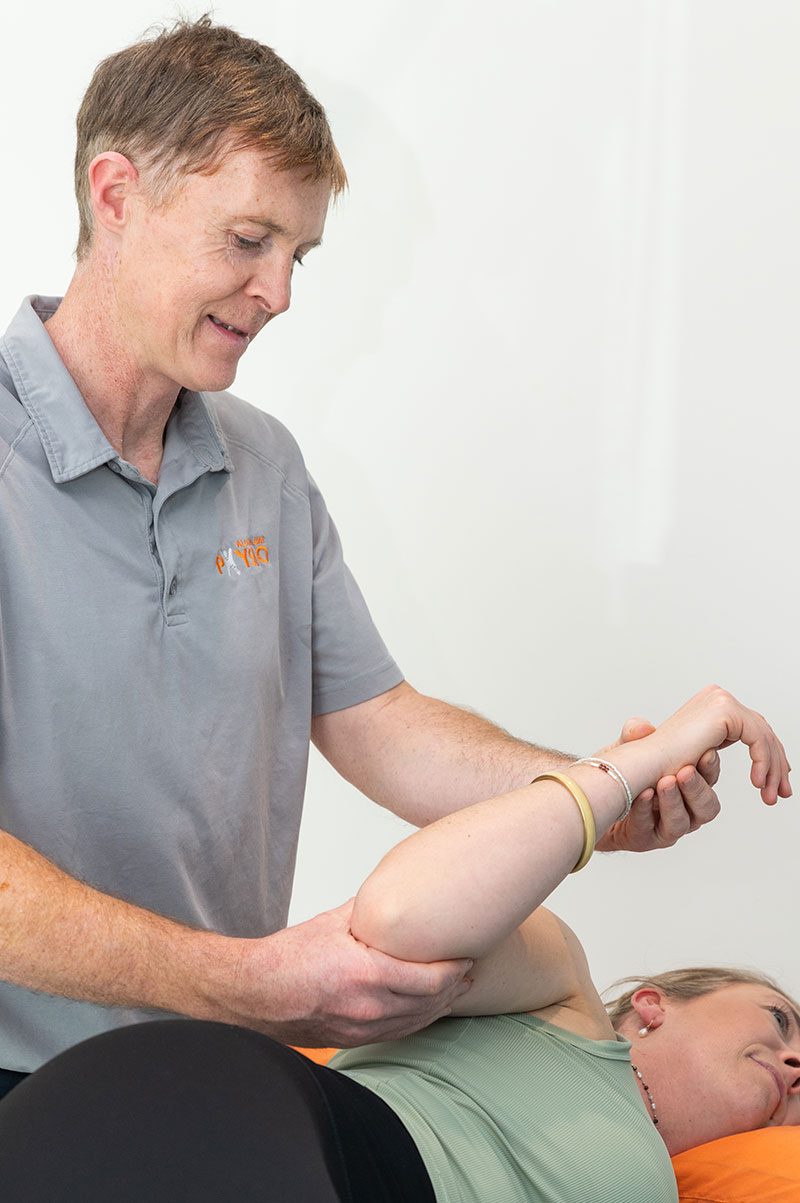
Sports physio assessment and treatment
A sports injury is not always the result of one obvious incident.
Some injuries follow a collision, awkward landing, tackle or fall. Others develop because the body has been exposed to more training than it has had time to adapt to.
A sudden increase in intensity, duration or overall training volume is one common example.
Overtraining can also contribute. Even when training has been increased gradually, too much total activity with insufficient rest can still place tissues under excessive load.
We see this particularly in teenagers involved in several sports at the same time. Each sport may have a sensible training program on its own, but the combined workload can become much greater when seasons overlap, finals approach or representative commitments increase.
Technique, preparation, equipment and playing surfaces can also influence injury risk.
The aim of assessment is to work out which of these factors are actually relevant to the athlete in front of us, rather than assume every sports injury has the same cause.
Physio for Sport Injuries
What sports injury physiotherapy may include
Treatment depends on the injured tissue, how the injury occurred and the demands of the sport.

Sports injury assessment
The first step is identifying the tissue most likely to be injured.
That may involve muscle, tendon, ligament, joint, bone or neural tissue.
The history of the injury, pain behaviour, movement, strength and sport-specific demands all help build the clinical picture.
For acute injuries, we also consider how the injury occurred, the direction of force and the movements that are currently limited.

Acute injury management
Early treatment may focus on settling pain and inflammation and restoring movement.
Depending on the presentation, this can include soft tissue mobilisation, dry needling, joint mobilisation and other techniques aimed at helping the athlete regain function.
The goal during this stage is not simply to make the area feel better. Rehabilitation begins with the eventual return to sport already in mind.

Movement and technique assessment
Technique can contribute to some sports injuries.
This may involve running gait, swimming technique, a tennis serve, batting or bowling mechanics, tackling or fielding movements.
Where relevant, we look at whether the athlete has the strength, range of motion and control required to perform those movements efficiently.
Video analysis may also be used to identify movement patterns, demonstrate possible changes and later show progress.

Sport-specific rehabilitation
Rehabilitation needs to reflect the movements required by the sport.
That may involve running, jumping, landing, changing direction, reaching, throwing, tackling or other position-specific demands.
We gradually reintroduce these movements as the injured tissue recovers and the athlete rebuilds strength and confidence.

Modified training and return to play
Returning to sport often begins before an athlete is ready for full competition.
A return-to-training plan may include modified drills, reduced volume, lower intensity or restricted contact before progressing further.
Communication with coaches and trainers can form part of this process so everyone understands what the athlete can currently do and how training should progress.
Rehabilitation continues through the later stages of return to play rather than stopping as soon as pain settles.

Return to activity support
Rehabilitation may be adjusted around work, sport, exercise, parenting, or everyday activities important to you.
Who physio for sports injuries may help
Physio for sports injuries may help athletes of different ages, ability levels and sporting backgrounds.
Aldinga Bay Physio see school-aged athletes, teenagers, club players, recreational competitors and older athletes who want to continue participating in the activities they enjoy.
Younger athletes can present with an additional challenge because they may be growing while also balancing school sport, club commitments, different age groups and representative programs.
Older athletes can have very different needs again. Golf and lawn bowls, for example, may place repeated demands through the back, hips and shoulders even though they are lower-impact sports.
Sports injury physiotherapy may also help people returning to running, football, netball, swimming, surfing, tennis, martial arts and other individual or team sports.
For injuries centred around the knee, see physio for knee pain.
The impact sports injuries can have on everyday life
For many people, sport is much more than exercise.
It can be an important part of routine, social life, competition and personal identity.
That is why the early stages of a sports injury can be particularly frustrating. Training may need to change, competition can be missed and progress can feel slower than the athlete wants.
The rehabilitation plan needs to recognise that.
A competitive athlete may be focused on returning before an important part of the season. A social player may simply want to get back to weekend sport without the injury flaring again.
Either way, the aim is to progress from symptom management into the movements, strength and physical demands required for a confident return.
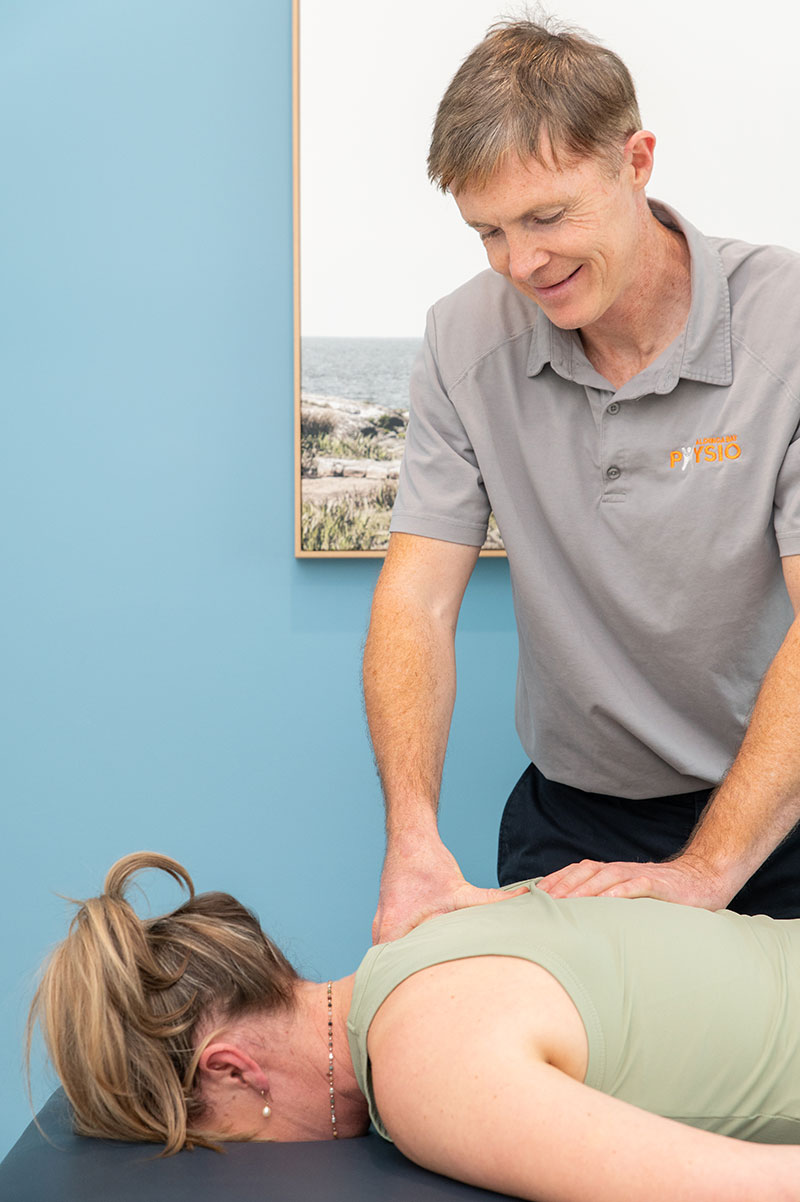
Understanding the causes of sports injuries
Sports injuries can have several contributing factors.
One of the most common is a rapid change in workload.
When training intensity, duration or total volume increases too quickly, muscles, tendons and joints may not have enough time to adapt.
Injury can also develop when there is simply too much training and not enough recovery.
Technique is another consideration. A suboptimal running gait, poor swimming form or problems with tackling, serving, batting or bowling mechanics can repeatedly load the same tissues.
Preparation matters as well.
Insufficient warm-up, limited mobility or muscle activation, inadequate hydration and poor nutrition can all affect how well the body copes with sport.
Equipment and playing surfaces may also contribute. Footwear, studs, ill-fitting equipment, hard surfaces or slippery grounds can change the stresses placed on the body.
And sometimes the cause is simply the unpredictable nature of competition. Heavy collisions, falls and awkward contact cannot always be prevented.
The purpose of assessment is to identify which factors are modifiable and which are not.
How physiotherapy for sports injuries is delivered
The first appointment starts with understanding the injury and the athlete.
We look at how the problem developed, the sporting movement involved, previous injuries, current training load and where the athlete is in their season.
The assessment may include:
- How and when the injury occurred
- Current pain and movement limitations
- Strength and range of motion
- The injured muscle, tendon, ligament, joint or other tissue
- Recent changes in training volume
- Signs of overtraining or insufficient recovery
- Sport-specific technique
- Equipment and footwear
- Playing or training surfaces
- Previous injury history
- Playing position or event requirements
- Return-to-training and competition goals
Treatment may draw on soft tissue mobilisation techniques, dry needling, Mulligan mobilisation techniques and neurodynamic approaches where neural factors are affecting pain or range of motion.
For shoulder-related sporting injuries, symptom modification procedures may also be used to assess how changes in movement or load influence symptoms.
The approach also draws on Australian Physiotherapy Association Sports Level 1 and Level 2 training.
Throughout rehabilitation, we focus on the modifiable factors most likely to make a meaningful difference rather than trying to change everything at once.
Good to know
Common questions about sports injuries
Who provides physio for sports injuries in Aldinga?
Aldinga Bay Physio provides assessment and rehabilitation for sports injuries across a wide range of sports and activity levels.
Treatment is based on the injured tissue, contributing factors and the physical demands required for the athlete to return to training and competition.
How does sports physio work?
Sports physio begins by identifying the injury and understanding how it happened.
Rehabilitation may include acute symptom management, strength and mobility work, movement retraining, sport-specific drills, modified training and progressive return to play.
What affects the cost of sports injury physiotherapy?
The cost can vary depending on consultation length, injury complexity and the amount of rehabilitation required.
A minor acute injury may require a different level of treatment from a significant ligament, tendon or recurrent sporting injury.

Your local physiotherapist
Areas we service for sports injury physiotherapy
Aldinga Bay Physio provides physio for sports injuries across Aldinga and surrounding southern areas including Aldinga Beach, Port Willunga, Sellicks Beach, Willunga, McLaren Valeand Maslin Beach.
Port Willunga
Sellicks Beach
Willunga
McLaren Vale
Seaford
Maslin Beach
The types of injuries we see often follow the local sporting seasons.
Summer brings swimming, stand-up paddleboarding, surfing and surf rescue injuries along the Aldinga coast.
In winter, football and netball injuries become more common through the Southern and Great Southern leagues.
We also see runners training for local events including the Great Southern Half Marathon, Great Southern Bolt, McLaren Vale Running Festival, Victor Harbor Half Marathon, Heysen Trail Ultra and trail events around Kuitpo Forest and Mount Bold.
You can also learn more about physio for back pain, physio for neck pain, physio for shoulder pain and physio for knee pain.
Why choose us
Why choose Aldinga Bay Physio for sports injury treatment

Accurate diagnosis of the injured tissue
Effective rehabilitation starts with understanding what has actually been injured.
We look closely at the muscle, tendon, ligament, joint or other tissue involved so treatment can be more specific to the presentation.
Athlete-centred rehabilitation
The plan considers your sport, playing position, previous training, injury history, time of season and personal goals.
What matters to a footballer in the middle of a season may be very different from the needs of a swimmer, golfer or recreational runner.
Sport-specific movement from early in rehabilitation
Where appropriate, sport-specific movement is introduced progressively rather than left until the very end.
This helps prepare the athlete for the movements they will eventually need to perform under greater speed, load and fatigue.
Training load and contributing factors
We consider training volume, recovery, technique, preparation, equipment and surfaces where these may have contributed to the injury.
The focus stays on the factors that can realistically be changed.
Return to training and competition
Rehabilitation can continue through modified training and into return to play.
Where useful, communication with coaches or trainers can help coordinate load and progression during this stage.
Education and long term management
We explain assessment findings clearly and help people better understand movement, loading, conditioning, and factors linked to recurrence.
FAQs
Frequently asked questions about physiotherapy for sports injuries
What types of sports injuries can physiotherapy assess?
Physiotherapy may be appropriate for injuries involving muscles, tendons, ligaments, joints and other musculoskeletal tissues.
These may include acute injuries from collisions or falls as well as gradual overuse problems linked to training load, technique or repeated movement.
Can sports physio help with an overuse injury?
Yes, physiotherapy may help assess overuse injuries where repeated loading has exceeded the current capacity of the tissue.
Assessment can consider training volume, recovery, biomechanics, technique and other contributing factors.
Our overuse injury guide explains this in more detail.
Do I need to stop sport completely after an injury?
Not every sports injury requires complete cessation of all activity.
Depending on the injury, modified training may form part of the rehabilitation process while the affected tissue recovers.
The appropriate level of activity depends on the injury, symptoms and stage of rehabilitation.
Can you work with my coach or trainer?
Where useful, communication with a coach or trainer can help coordinate modified training and progression back towards full participation.
This may be particularly valuable when an athlete is returning during the competitive season.
When can I return to competition?
Return to competition depends on the injury, tissue healing, strength, movement, sport-specific function and the demands of the athlete’s position or event.
The process usually progresses from rehabilitation into modified training, fuller training exposure and then competition when appropriate.
Can physiotherapy help reduce the risk of another sports injury?
Part of rehabilitation may involve identifying modifiable factors that contributed to the original injury.
These may include training load, movement technique, strength, recovery, preparation or equipment.
Addressing these factors can form part of preparing the athlete for future training and competition.
Book a sports physio appointment in Aldinga
If a sports injury is keeping you away from training, competition or the activity you enjoy, contact Aldinga Bay Physio to arrange an assessment.
We can assess the injured tissue, look at the factors that may have contributed and develop a rehabilitation plan around the demands of your sport.
Book your appointment online or call us directly.